
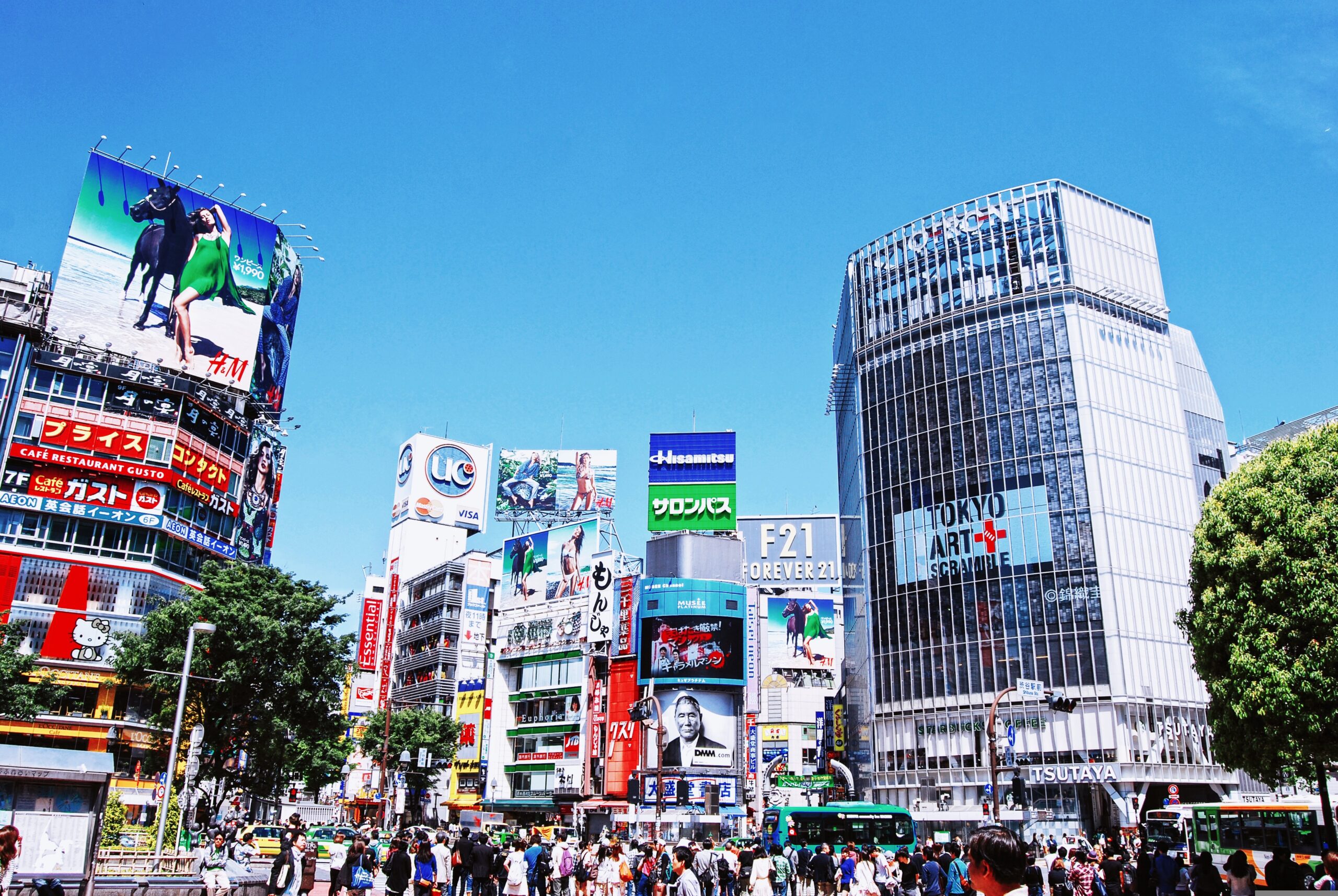
Introduction: The Illusion of Conglomerate Stability
Walking through major metropolitan commercial centers, retail investors often marvel at the sheer scale of landmark developments, viewing them as testaments to corporate permanence. However, sophisticated institutional capital views these mixed-use mega-complexes through a strictly structural lens, recognizing them as dynamic capital engines designed to maximize spatial leverage. While tier-one developers ruthlessly optimize these assets to drive yield, a distinct subset of legacy conglomerates operates differently. These entities sit on prime real estate while functioning as conservative landlords, utilizing steady rental yields to mask the deteriorating unit economics of their core operational businesses.
From a conventional viewpoint, this cross-subsidization is praised as a defensive moat against macroeconomic volatility. Yet, in the precise language of private equity and capital markets, this represents a massive, value-destroying structural inefficiency. Low-yield core operations are tethered to high-yield real estate, severely diluting Return on Invested Capital (ROIC) and creating a classic value trap. Resolving this structural friction requires dismantling the balance sheet, a surgical separation of operational cash flows from underlying asset value.
The Case Study: Sapporo Holdings and the Yebisu Carve-Out (Japan)
To ground this structural theory in reality, we turn to the Japanese market and the unfolding narrative surrounding Sapporo Holdings. Despite its legacy as a 140-year-old premier brewery, the company currently trades at a Price-to-Book Ratio (PBR) well below 1.0x. This discounted valuation is not a market oversight; rather, it is a hyper-rational pricing of the company’s inefficient capital stack. Sapporo’s core beverage business is operating in a zero-sum domestic market characterized by demographic headwinds and shifting consumption trends.
To maintain market share, the company endures margin-crushing marketing expenditures. However, these operational deficits are quietly obfuscated by the massive Net Operating Income (NOI) generated by its crown jewel real estate asset: Yebisu Garden Place. Located in a prime Tokyo commercial district, this property functions as a financial safety net for the beverage division. Recognizing this trapped value, global private equity powerhouses such as KKR and PAG, alongside activist funds like 3D Investment Partners, have circled the asset. Their objective is to execute a carve-out of the real estate portfolio—estimated at approximately ¥480 billion—forcing a long-overdue transition toward capital efficiency.
Investment Thesis & Structural Analysis
The OpCo-PropCo Bifurcation Framework
The core architecture of this proposed buyout relies on severing the parasitic relationship between the operating company (OpCo) and the property company (PropCo). By treating the entity as two distinct asset classes, the sponsor can engineer a massive multiple arbitrage.
- The OpCo (Beverage Operations): The low-growth food and beverage division is structurally isolated and re-rated with a conservative, discounted multiple reflective of its stagnant peer group.
- The PropCo (Prime Real Estate): The Grade-A Tokyo office and commercial portfolio is extracted and valued on a capitalization rate (Cap Rate) of roughly 3.5% to 4.0%. Valued independently, this real estate commands a REIT-level premium.
- The SOTP Anomaly: A Sum-of-the-Parts (SOTP) analysis reveals that the true market value of the unencumbered real estate likely exceeds Sapporo Holdings’ entire current market capitalization.
The Dividend Recapitalization Engine
This structural bifurcation serves as the foundation for a highly defensive downside hedge, executed via a Dividend Recapitalization playbook. The strategy is built entirely around principal protection rather than speculative growth.
- Asset-Backed Leverage: The carved-out PropCo generates highly predictable, stable lease cash flows. Sponsors leverage this predictability to secure massive senior acquisition financing against the real estate.
- Accelerated Capital Extraction: The newly raised debt is utilized to fund a special dividend or a massive share buyback prior to the ultimate exit. This allows the equity sponsor to extract their initial invested capital almost immediately.
- Creating “House Money”: Once the equity basis is recovered through the dividend recap, the remaining pure-play beverage OpCo operates completely de-risked. Even if the operational turnaround fails, the investment principal has been mathematically secured.
Downstream Syndicate Application: The Micro-PE Playbook
This overarching framework is not exclusively reserved for Wall Street mega-funds; it represents a scalable methodology for capital allocation. Savvy micro-PE sponsors and independent syndicate builders can adapt this exact OpCo-PropCo logic to smaller transactions.
- Asset Stripping in the Middle Market: When acquiring a distressed brick-and-mortar franchise, sponsors isolate the underlying real estate (warehouses, prime retail plots) from the struggling retail operations.
- Sale and Leaseback: By executing a sale and leaseback of the physical assets to regional REITs, the sponsor generates immediate liquidity to retire the senior debt and recoup the equity check.
- Digital Asset Bifurcation: In the tech sector, this translates to separating a high-burn, high-traffic freemium platform from a highly sticky, cash-flowing intellectual property (IP) or core membership base. The unprofitable traffic engine is quarantined, while the premium IP is leveraged to secure anchor financing.
Valuation & Risk
While the structural setup is highly defensive, dismantling a legacy conglomerate triggers profound macro and micro risks that demand rigorous underwriting.
Key Risk Factors
- The “Naked OpCo” Reality: Historically, Sapporo’s beverage unit survived due to the real estate subsidy. Once severed, the standalone OpCo will face its true, potentially abysmal, Return on Invested Capital (ROIC). If the standalone financials are catastrophic, it creates severe valuation impairments, making a secondary buyout or strategic sale virtually impossible.
- Macroeconomic Shifts (Interest Rate Sensitivity): The entire valuation arbitrage hinges on Tokyo commercial real estate maintaining historically low Cap Rates. If the Bank of Japan (BOJ) aggressively pivots from its Negative Interest Rate Policy (NIRP) into a prolonged rate hike cycle, the risk-free rate will rise. This forces Cap Rates upward, aggressively compressing the PropCo’s terminal value and ballooning the interest burden on the senior acquisition debt.
- Systemic Supply Glut: The Tokyo Stock Exchange (TSE) mandate forcing companies to trade above a 1.0x PBR is creating unintended systemic risks. If legacy retailers, railways, and manufacturers simultaneously capitulate to activist pressure and flood the market with prime commercial real estate, a severe supply glut will follow. This would crush asset multiples exactly when the sponsor plans to exit the PropCo.
Conclusion
The latent enterprise value within legacy conglomerates is rarely found in the revival of their consumer-facing brands. Instead, true alpha is generated by identifying structural asymmetries hidden deep within the balance sheet. By isolating tangible real estate assets to completely hedge downside risk, and mercilessly bifurcating the corporate structure, capital architects can extract trapped multiples that the broader market fails to price.
This is the ultimate lesson of the corporate carve-out: superior returns are not a product of predicting consumer trends, but of engineering structural dominance. Whether dealing with a century-old Japanese brewery or a middle-market digital platform, the governing logic remains the same. Do not stand at the door hoping for the market to grant entry; design the door yourself through ruthless asset separation and capital efficiency.
For more structural insights and deep-dive video breakdowns, visit Structure Syndicate on YouTube.