Introduction: The Macroeconomic Chokehold and Credit Arbitrage
In the prevailing macroeconomic environment, legacy asset-heavy industries frequently suffer not from a lack of operational viability, but from severe financial asphyxiation. Consider a state-of-the-art engine, fully built, with an open track ahead and abundant fuel in the market. Yet, the engine remains paralyzed, slowly deteriorating into scrap solely because the oxygen intake valve is sealed shut. If a market participant acquires this suffocating asset at a distressed valuation and simply attaches their own oxygen supply, they have not merely purchased hardware. They have executed a highly lucrative credit arbitrage.
Capital markets are replete with businesses enduring this exact form of liquidity asphyxiation. Global supply chains possess immense backlog potential, yet many tier-2 manufacturing entities are forced to forfeit high-yield contracts due to locked financial valves—specifically, the inability to secure requisite financial guarantees from tier-1 institutions. Conversely, legacy conglomerates often sit on massive cash reserves and pristine corporate credit ratings, yet remain trapped in declining industries, effectively incinerating the opportunity cost of capital on a daily basis.
This research paper dissects a quintessential transaction that epitomizes this dynamic. Moving beyond superficial multiple expansion frameworks or naive synergy narratives, this analysis deconstructs the underlying structural blind spots, the weaponization of balance sheets, and the asymmetric risk-control mechanisms engineered by sophisticated private equity sponsors.
The Case Study: Taekwang Group’s Acquisition of K Shipbuilding
To anchor this structural analysis in empirical reality, we examine the recent corporate maneuvers involving Taekwang Group and K Shipbuilding (formerly STX Offshore & Shipbuilding, based in South Korea). Market consensus superficially frames this transaction as a traditional conglomerate diversification strategy—a cash-rich petrochemical behemoth (Taekwang) acquiring a mid-sized shipbuilder to secure a new growth vector.
However, from a structural architect’s perspective, this deal is decidedly not a physical expansion of a manufacturing portfolio. It is an intricately calculated credit arbitrage and a robust leverage play predicated on asset carve-outs. K Shipbuilding possesses world-class yard capacity and access to a booming global order book, but has been fundamentally paralyzed by an inability to secure Refund Guarantees (RGs) from commercial banks under its previous Private Equity (PE) ownership, led by KHI Investment.
Taekwang Group enters not merely to inject capital, but to deploy its massive corporate credit as a structural skeleton key. By underwriting the target’s balance sheet, Taekwang unlocks the commercial banking bottleneck, instantly converting latent order books into tangible cash flows without deploying proportional equity.
Investment Thesis & Structural Analysis
The architectural elegance of this transaction relies on two primary governing dynamics: the deployment of corporate credit as an operational catalyst and the spatial financialization of real estate assets.
The Weaponization of Corporate Credit
Shipbuilding is fundamentally a financing business masquerading as heavy manufacturing. To secure hundreds of millions of dollars in advance payments from shipowners, the builder must procure a Refund Guarantee (RG) from a tier-1 financial institution. If the banking syndicate refuses to open the RG limit, order book execution immediately evaporates.
- The PE Duration Mismatch: The legacy financial sponsor (KHI) failed precisely at this junction. PE funds are structurally constrained by finite fund lifecycles and strict Internal Rate of Return (IRR) hurdles. Commercial banks model this duration mismatch rigorously; no institution will underwrite a multi-year RG for a mega-vessel knowing the controlling shareholder is a transient entity incentivized to exit rather than fund long-term environmental CapEx. Consequently, K Shipbuilding suffered from collapsing dock turnover rates and fixed-cost absorption failures.
- Cost of Capital Compression: The introduction of Taekwang’s perpetual capital fundamentally resets the banking sector’s risk underwriting logic. Backed by Taekwang’s multi-billion-dollar corporate treasury, the target’s credit profile is instantly de-risked. As the RG limits unlock, high-margin contracts materialize, flooding the target with advance payments. The debt yield curve shifts downward, compressing the cost of capital by an estimated 400+ basis points and exponentially inflating the present value of the target’s Free Cash Flow (FCF).
Spatial Financialization and the PropCo/OpCo Carve-out
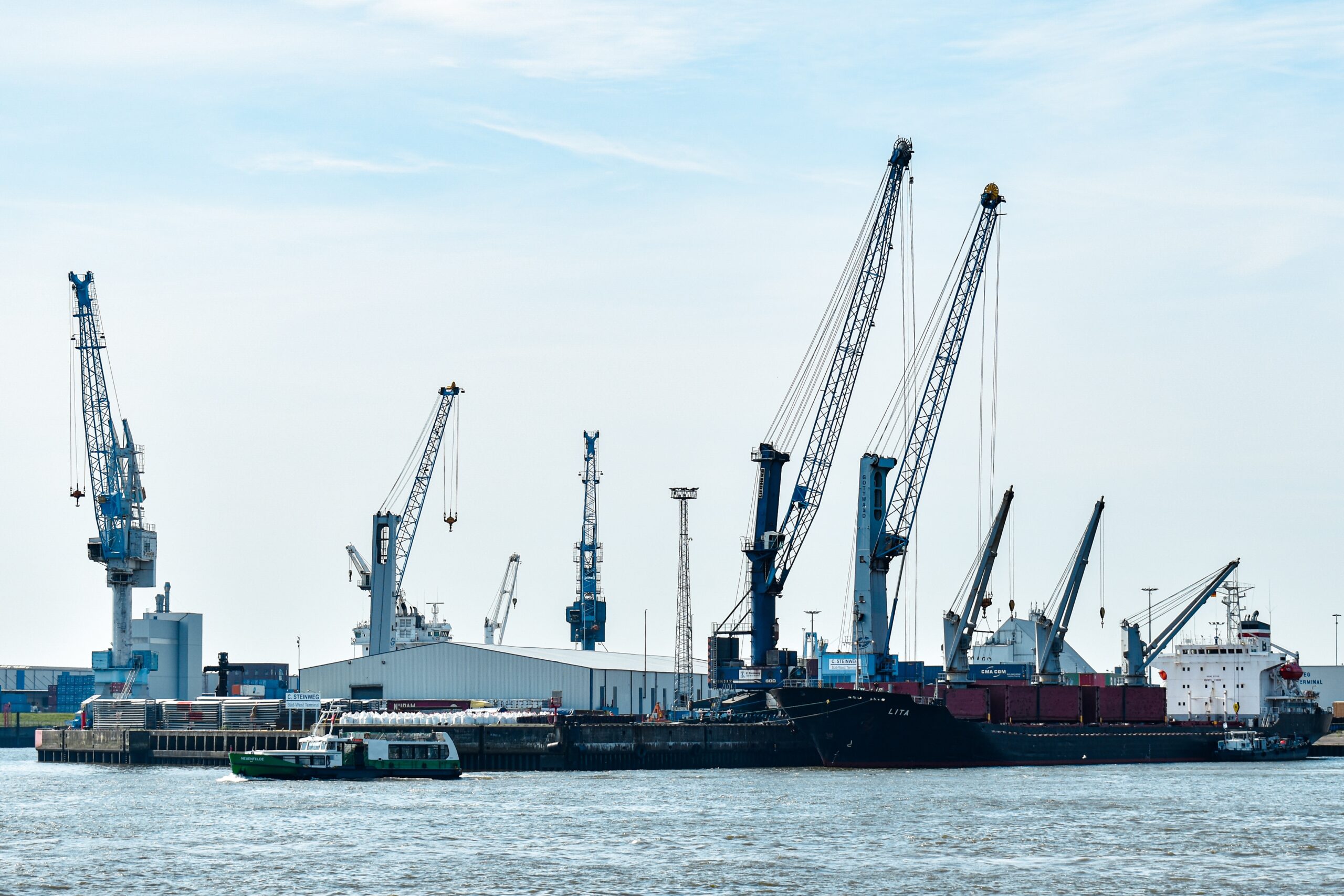
K Shipbuilding’s Jinhae shipyard is not merely an industrial facility; it is a sprawling, 1-million-pyeong (approx. 800-acre) real estate asset. A conventional buyout would simply absorb this heavy asset at book value, severely diluting Return on Equity (ROE).
- Asset Bifurcation: The structural center of gravity in this deal lies in the potential separation of the operating company (OpCo) from the underlying real estate (PropCo). By carving out the real property for a sale-and-leaseback arrangement or shifting it into an infrastructure vehicle, the asset transforms from a capital sink into a massive liquidity generation engine.
- Zero-Equity CapEx Funding: The liquidity liberated from the PropCo carve-out serves a dual mandate. It facilitates the exit liquidity for legacy PE stakeholders and directly funds the requisite CapEx for next-generation, dual-fuel engine infrastructure. This sophisticated cap stack engineering entirely negates the necessity for Taekwang to inject its own equity to fund operational upgrades.
Unit Economics and Operational Leverage
Once the financial architecture is stabilized, a radical transformation of unit economics commences. The legacy strategy of diversified, multi-vessel construction is abandoned in favor of extreme operational efficiency.
- Series Construction Dynamics: The dock is monopolized by a single vessel class where the yard commands a distinct competitive advantage—Medium Range (MR) Tankers. Through continuous series construction, initial design expenditures are entirely amortized over subsequent vessels.
- Margin Expansion: Man-hour requirements compress rapidly, construction delays are mitigated, and the cash conversion cycle shortens dramatically. When exogenous pricing power (rising vessel prices) intersects with endogenous cost controls, the operating leverage breaches its critical threshold, resulting in exponential margin expansion.
Valuation & Risk: Downside Protection and Capital Firewalls
Sophisticated deal architects do not construct frameworks solely to maximize IRR; they design structures to ensure absolute capital preservation. While retail participants obsess over exit multiples, this transaction’s architecture is heavily skewed toward downside hedging, acknowledging the inherent, uncontrollable macroeconomic volatility of the maritime sector.
Asymmetric Risk Allocation and Mezzanine Tranches
The 1-million-pyeong yard acts as the ultimate liquidation backstop. In a severe macroeconomic stress scenario, this real estate—adjacent to the Jinhae New Port development—retains a formidable floor valuation as logistics or offshore wind infrastructure, entirely decoupled from shipbuilding multiples.
- RCPS Firewalls: To insulate the acquirer’s equity from operational volatility, residual risk is forcefully allocated to the legacy PE sellers through Redeemable Convertible Preference Shares (RCPS). Bound by fund maturity pressures, legacy sponsors capitulate to these terms.
- Capped Upside: The acquirer embeds aggressive call options within the RCPS. If the turnaround triggers explosive upside, the acquirer exercises the call to capture the premium. If the asset degrades, downside risks are neutralized through real estate liquidation, establishing a deeply asymmetric risk-reward profile.
Phantom Debt and Escrow Engineering
Shipbuilding assets historically harbor catastrophic off-balance-sheet liabilities, including unrecorded warranty claims and legacy litigation.
To hedge against retroactive punitive damages wiping out transaction yields, the architects mandate that a minimum of 10% of the acquisition consideration remains frozen in an escrow account for a multi-year period.
Coupled with mandatory Representation and Warranty (R&W) insurance, tail risks are cleanly transferred to third-party underwriters and the sellers, insulating the new OpCo.
Veto Governance and Tail Risks
Rather than interfering with granular manufacturing processes, the acquirer asserts control through surgical governance mechanisms. By deploying a Chief Financial Officer and dominating the board, the acquirer holds absolute veto power over low-margin contracts and CapEx overruns, effectively monopolizing the cash flow valve. However, systemic tail risks remain un-hedgeable:
- Labor Bottlenecks and Liquidated Damages (LD): The sector relies heavily on manual assembly. A mere 14-day delay due to E-7 visa quota exhaustion or skilled labor shortages can trigger cascading dock delays. The resultant Liquidated Damages (LD) compound exponentially, immediately vaporizing operating margins and threatening technical default.
- Supply Chain Subordination: As global demand for dual-fuel vessels surges, mid-sized yards face severe supply chain tiering. In an engine shortage, tier-2 builders are subordinated by dominant global yards, risking complete operational paralysis despite robust order books.
Conclusion
This transaction transcends a conventional LBO or corporate bolt-on acquisition. It is a calculated exercise in financial engineering where an acquirer identifies an asset in distress due solely to capital constraints, weaponizes its own pristine credit to shatter the operational bottleneck, and aggressively bifurcates physical assets to ensure downside protection. The superficial discourse regarding industry super-cycles is mere retail noise. The true valuation victories are won in the unseen spreadsheets, through the surgical dissection of the balance sheet and the redefinition of liability structures.
The ultimate takeaway for global investors and syndicate builders is the application of this meta-logic: separate heavy capital from agile operations, utilize third-party credit to bypass systemic bottlenecks, and establish asymmetric governance where upside is captured while downside is rigidly quarantined. In the modern financial landscape, the most formidable edge is not absolute capital size, but the structural capacity to architect and reposition the very framework of the transaction.
For more structural insights and deep-dive video breakdowns, visit Structure Syndicate on YouTube.