
Introduction: The Paradox of Public Capital and the Hidden Turbine
A profound structural paradox currently plagues heavy manufacturing sectors undergoing macroeconomic supercycles: the violent friction between the demand for explosive capacity expansion and the risk aversion of public equity markets. When a massive reservoir of market demand is ready to burst, logical capital allocation dictates immediate, large-scale capital expenditures (CapEx) to capture the windfall. However, public shareholders routinely reject these capital calls. Retail and institutional investors in public markets often prioritize immediate dividend yields and fear equity dilution over long-term strategic dominance, effectively paralyzing corporate boards.
To bypass this paralysis, sophisticated capital architects engineer alternate pathways. Rather than fighting public market noise, they construct highly opaque, private capital pipelines. By injecting external mercenary capital directly into the operational subsidiary—far removed from the purview of retail activists—they insulate the growth engine. This mechanism completely silences public friction while privatizing the explosive upside.
The resulting framework is a masterclass in corporate structuring. It is not merely an exercise in capital raising; it is a clinical deployment of private market mechanics designed to capture multiple expansion, ring-fence operational liabilities, and ultimately consolidate owner control without requiring primary equity issuance.
The Case Study: Poongsan Corporation and the South Korean Defense Supercycle
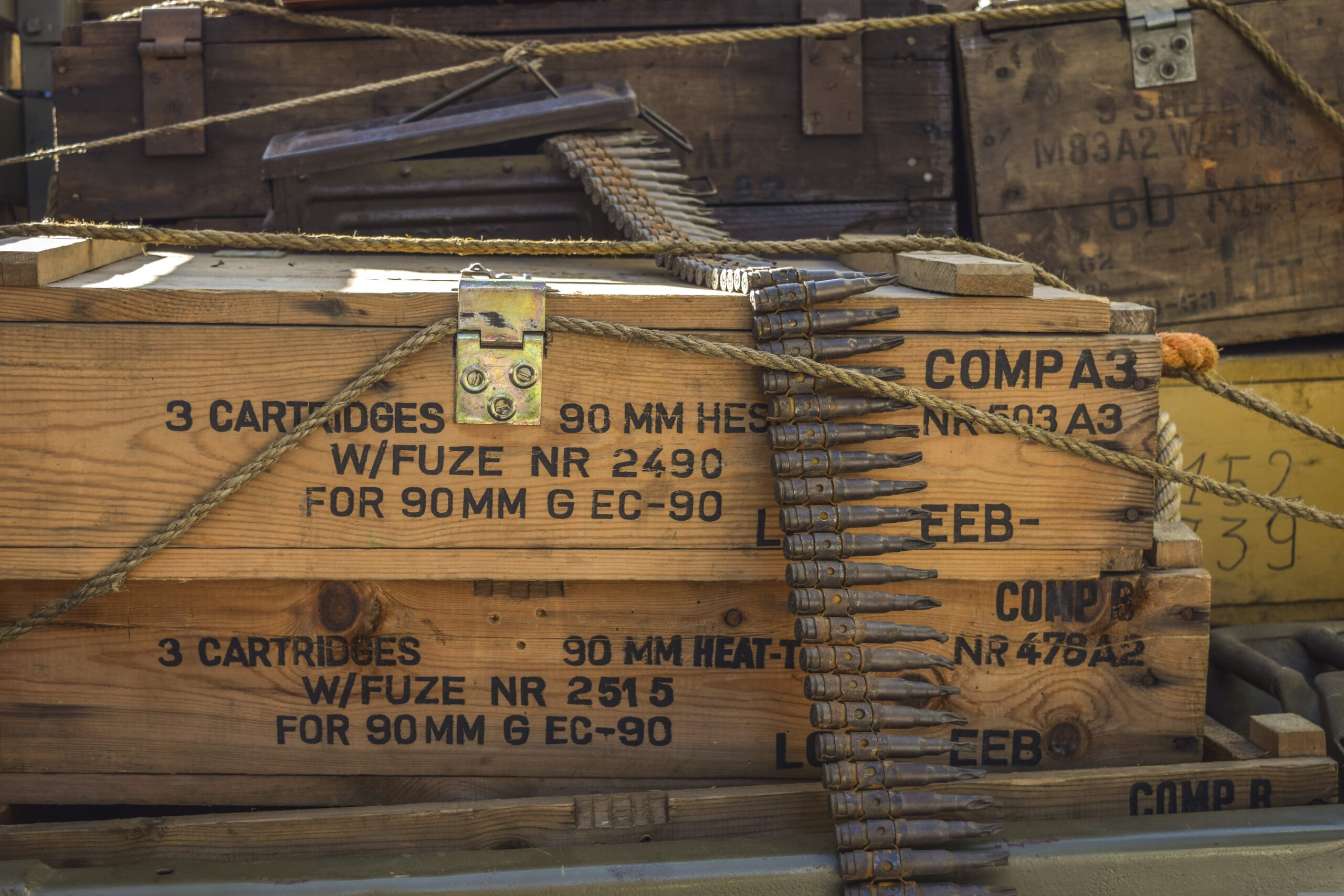
To ground these theoretical mechanics in market reality, it is imperative to examine the ongoing structural dynamics within Poongsan Corporation, a prominent industrial conglomerate based in South Korea. Poongsan operates under a dual-engine model: a legacy commercial copper fabrication business and a highly specialized defense division manufacturing 155mm artillery shells.
The structural bottleneck for Poongsan is glaringly apparent. The low-margin, macro-sensitive copper division acts as a heavy anchor, dragging down the consolidated valuation of the entity. Conversely, the defense division has entered an unprecedented global supercycle, driven by prolonged geopolitical conflicts in Ukraine and the Middle East, which have thoroughly depleted the ammunition reserves of NATO and Western-aligned nations.
To monopolize this supplier-driven market, Poongsan requires hundreds of millions of dollars in immediate CapEx for new press facilities and explosive charging lines. However, the holding company’s conservative balance sheet cannot autonomously support this scale of investment. A previous attempt in 2022 to execute a public spin-off of the defense unit was violently derailed by minority shareholders, who feared severe equity dilution and a permanent loss of value at the parent-company level. Consequently, the public capital market route is entirely closed, forcing the implementation of a sophisticated private carve-out and mezzanine financing strategy to bypass the governance gridlock.
Investment Thesis & Structural Analysis
The architecture of this proposed transaction focuses strictly on downside protection and governance control rather than naive growth projections. The core investment thesis relies on executing a flawless structural arbitrage.
The Governing Logic: Capital Restructuring and Structural Ring-Fencing
The primary objective of this private carve-out is to physically and financially separate the high-growth defense asset from the legacy copper business without exposing the new entity to the volatility of a public exchange. By establishing a privately held subsidiary, the structural architects neutralize the threat of activist funds and public retail interference.
Private equity (PE) sponsors are introduced not as common shareholders, but as highly structured strategic financiers. This maneuver allows the defense unit to immediately secure the requisite capital—estimated at over $400 million—to initiate a global capacity expansion rally. Ultimately, this is an advanced capital restructuring event. The controlling shareholders temporarily leverage private capital to execute capacity expansion without ever relinquishing permanent equity control.
The Mezzanine Shield: Asymmetric Risk and Cap Stack Dominance
Institutional capital at this echelon rarely participates in vanilla common equity risk. The capital stack is engineered using robust mezzanine tranches—specifically Redeemable Convertible Preference Shares (RCPS) or tightly covenanted convertible debt. This creates an asymmetric payoff matrix.
- Downside Hedging: If the defense supercycle prematurely collapses, the mezzanine instruments function purely as senior debt, guaranteeing the return of principal alongside a compounded annual hurdle rate.
- Take-or-Pay Mandates: Capital deployment is strictly contingent upon the subsidiary securing long-term (5+ years) sovereign procurement contracts. These contracts must include “Take-or-Pay” provisions, shifting the geopolitical demand risk entirely onto the defense budgets of allied nations.
- Cost Escalation Covenants: To shield against raw material volatility (e.g., LME copper and zinc prices), the financing agreements mandate cost-pass-through clauses. If EBITDA margins drop below a designated threshold, punitive put options are instantly triggered, cross-collateralized against the owner’s paramount holding company shares.
- Governance Levers: While PE may hold a minority stake to avoid regulatory scrutiny regarding defense ownership, ironclad shareholder agreements grant them veto power over annual budgets, subsequent CapEx, dividend recapitalizations, and the termination of C-suite executives.
Multiple Arbitrage and Operating Leverage
The financial upside is generated through a calculated multiple expansion strategy combined with extreme operating leverage.
Heavy defense manufacturing is a rigid fixed-cost business. Once a facility breaches a ~70% utilization threshold, the marginal cost of producing additional munitions approaches zero, causing EBITDA margins to expand exponentially from baseline single digits to high double digits. Furthermore, by carving out the defense unit from the parent’s conglomerate discount (trading historically at ~5x EV/EBITDA), the standalone entity is positioned to command pure-play defense multiples (8x-10x EV/EBITDA) upon ultimate exit or recapitalization.
The true genius of the structure, however, lies in the Call Option. The original owner retains a deeply embedded contractual right to buy out the PE sponsor’s stake at a pre-determined Internal Rate of Return (IRR) threshold once the expansion phase is mature. This effectively allows the founder to execute a synthetic Leveraged Buyout (LBO), utilizing private sponsor capital to scale the business, only to sweep the remaining exponential equity upside back into their proprietary holdings.
Valuation Constraints & Tail Risks
Despite rigorous downside modeling, absolute invulnerability is a myth. Sophisticated structures are continually tested by exogenous macroeconomic shocks that can rapidly decimate spreadsheet valuations.
ESG Exclusions and Liquidity Traps
The most critical threat to the exit narrative is the rapidly tightening grip of ESG compliance. The manufacturing of lethal munitions—particularly artillery and cluster variants—faces severe negative screening from global mega-funds, sovereign wealth funds, and major institutional LPs. While immediate wartime realities have temporarily inflated defense multiples, strict ESG mandates are structurally permanent. Should the original owner forfeit their call option, the PE sponsor will face a drastically contracted pool of potential secondary buyers. This illiquidity translates directly into massive valuation discounts, potentially trapping the sponsor in a highly scrutinized asset.
Execution Friction and the CapEx Death Valley
Capital commitments alone do not manufacture artillery shells. The execution risk inherent in heavy industrial scaling is immense. While deploying capital to acquire state-of-the-art press machinery is straightforward, securing the highly specialized, government-licensed engineering talent required to operate explosive charging lines is a severe bottleneck. Any delay caused by labor union friction, supply chain disruption, or regulatory bottlenecks plunges the asset into a severe “Death Valley” curve. During this period, cash burn accelerates due to compounding mezzanine interest and massive depreciation, while revenue generation remains stalled at zero.
Geopolitical Volatility and Stranded Asset Realities
Defense valuations are ultimately a derivative of sovereign policy. The entire export pipeline relies absolutely on the issuance of government export licenses. A shift in domestic political leadership or a pivot toward isolationist policies (e.g., “America First” mandates restricting allied supply chains) could result in the sudden revocation of export permits. Such an event would instantly destroy supply credibility with NATO allies. Furthermore, as the theater of war transitions rapidly from unguided kinetic artillery to precision-guided munitions and autonomous drone swarms over the next decade, there is a material risk that these newly financed 155mm production lines will become obsolete. Without agile technological pivots, these billion-dollar facilities risk becoming permanent stranded assets.
Conclusion: The Privatization of Structural Arbitrage
The potential carve-out of Poongsan’s defense operations is not merely a localized corporate event; it is a textbook blueprint of Wall Street-grade financial engineering deployed in a sovereign defense context. It demonstrates how elite capital operators bypass public market inefficiency, erect impenetrable downside defenses using mezzanine instruments, and architect multiple expansions that are aggressively privatized.
Crucially, the mechanics of this macro-level transaction serve as a universally applicable framework for structural design at any scale. The governing principles remain identical whether restructuring a multi-billion-dollar industrial conglomerate or architecting the cap stack for a micro-cap technology spin-off:
- Isolate the Asset: Ruthlessly carve out high-growth, high-multiple assets from low-margin legacy cash flows to eliminate conglomerate discounts.
- Deploy Mezzanine Mechanics: Never issue pure common equity to growth partners. Utilize preference structures that grant priority cash flows and downside protection to investors while severely capping their absolute equity upside.
- Embed the Call Option: Founders and original sponsors must permanently retain a mechanism to buy out early-stage growth capital at fixed return hurdles, ensuring that long-term exponential valuations remain fiercely protected and wholly owned.
In the modern capital ecosystem, dominance is not achieved by merely predicting market cycles. It is achieved by engineering the very structures that control them.
For more structural insights and deep-dive video breakdowns, visit Structure Syndicate on YouTube.