Introduction: The Illusion of Perpetual Yield in Legacy Monopolies
Consider a monolithic lighthouse that has guided maritime trade through treacherous straits for over a century. Suddenly, the aristocratic family that owns this irreplaceable asset lists its operating rights on the open market. Amidst severe information asymmetry, conventional capital rushes in, mesmerized by the prospect of perpetual light and monopolistic toll revenues. However, the sophisticated seller is not merely seeking liquidity. Proprietary internal data reveals a terminal reality: satellite GPS is imminent, and the lighthouse’s core utility is facing structural obsolescence. The seller is not exiting the illumination business; they are extracting the residual land value of the cliff it stands on before the structural decline becomes public consensus.
This grim allegory perfectly encapsulates the fundamental mechanics of securitizing legacy assets in modern capital markets. Behind the alluring veil of contracted yields and monopolistic infrastructure lies the cold calculus of sellers timing their exit precisely at the intersection of physical longevity and economic obsolescence. Unsophisticated investors, blinded by historical EBITDA margins, often fall prey to the hidden traps of reverse operating leverage and governance deadlocks. To survive in this arena, capital allocators must transcend superficial valuation multiples and aggressively deconstruct the structural blind spots and control mechanisms engineered into the cap stack.
The Case Study: Unpacking the South Korean Midstream Dilemma
To ground these theoretical frameworks in reality, this report examines a live transaction within the South Korean market: the potential divestiture of Daehan Oil Pipeline Corporation (DOPCO) by its primary sponsor, SK Innovation. While prominent local private equity houses such as IMM and Stick Investment monitor the situation, the surface-level metrics present a flawless cash cow.
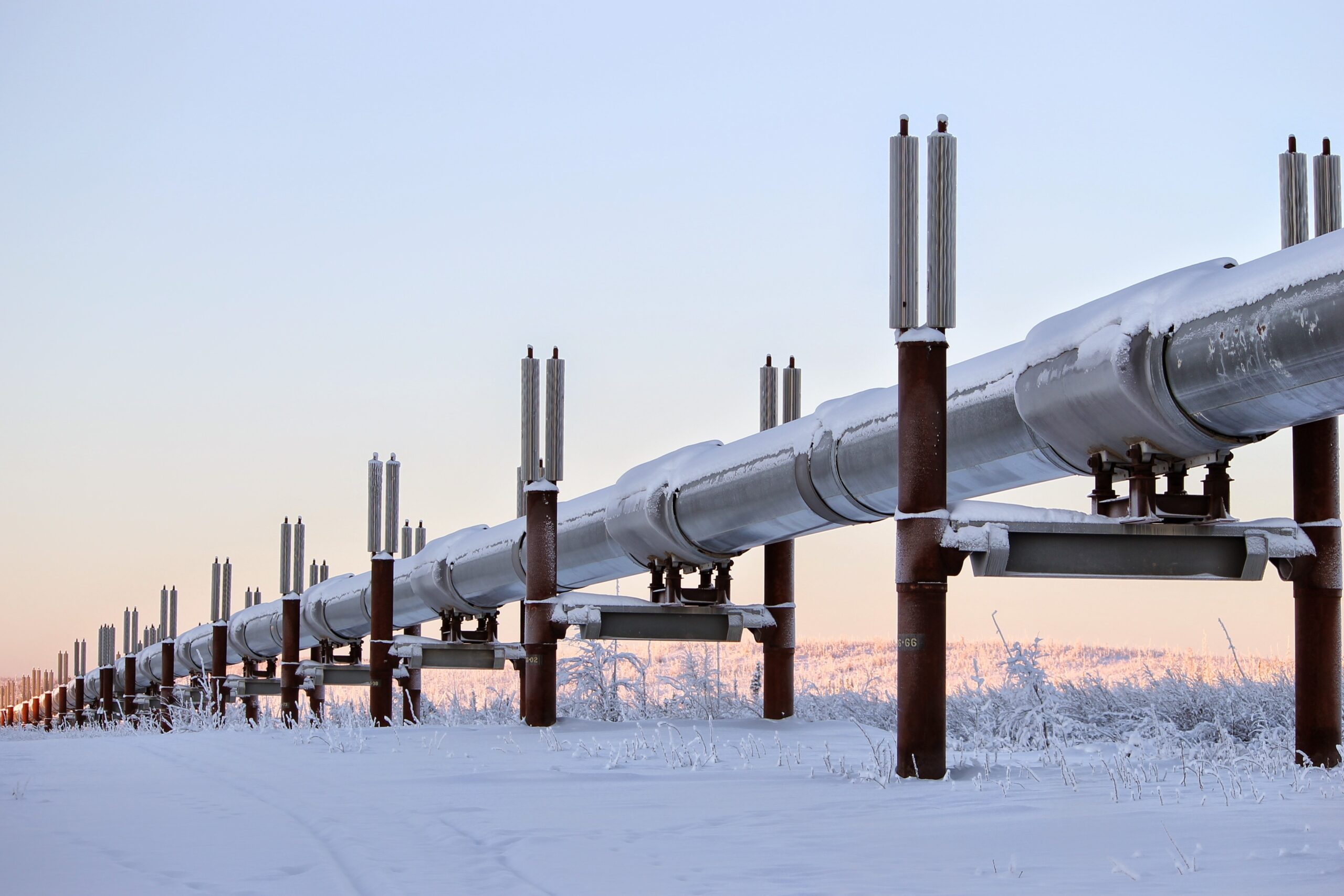
The asset boasts a 1,200-kilometer nationwide pipeline network with entirely amortized initial capital expenditures, resulting in an overwhelming contribution margin where the marginal cost of additional volume approaches zero. It inherently possesses an impenetrable moat against alternative transport methods like tanker trucks or coastal shipping. However, applying a conventional Discounted Cash Flow (DCF) model to this target is an exercise in structural deception. The asset is not a perpetual cash engine; it is a meticulously timed financial mechanism facing irreversible macro headwinds.
Investment Thesis & Structural Analysis
To underwrite a legacy midstream asset, financial sponsors must discard traditional growth-oriented playbooks. The investment thesis hinges not on volume expansion, but on aggressive asset decoupling and downside mitigation.
The Illusion of Terminal Value and Reverse Operating Leverage
The macro-profit pool anchoring this business is undergoing structural evaporation. The acceleration of EV penetration and the broader energy transition mandate a permanent downward trajectory for internal combustion engine (ICE) fuel volumes. This introduces a critical vulnerability:
- High Fixed-Cost Dynamics: Pipeline economics are governed by extreme fixed costs and restricted variable costs.
- Reverse Operating Leverage: While volume growth triggers explosive operating leverage, a volume decline below the breakeven point does not result in a linear margin compression. Instead, profitability collapses exponentially.
- Negative Terminal Value: Assigning a positive terminal growth rate to a stranded asset is fundamentally flawed; the true terminal value is distinctly negative.
The Governance Trap: Cap Table Misalignment
A severe structural vulnerability lies in the target’s deformed capitalization table, creating an inescapable governance deadlock. In declining volume scenarios, the sole mechanism to defend profitability is pricing power (tariff hikes). However, the target’s shareholder base consists entirely of its core customers. SK Innovation holds a 41% stake, while the remaining equity is dispersed among rival refiners (GS Caltex, S-Oil, HD Hyundai Oilbank).
- Conflict of Interest: Financial sponsors acquiring the 41% minority stake to push for tariff increases will face unanimous vetoes from other shareholders, whose primary objective is minimizing their own logistics OPEX.
- Regulatory Ceiling: The asset is classified as a public utility, heavily price-controlled by regulatory bodies to manage national inflation.
- Minority Discount: Holding a 41% equity tranche without pricing power traps the investor in a structural prison where dividends gradually evaporate.
Asset Decoupling: The PropCo/OpCo Carve-Out Strategy
The true alpha in this transaction does not flow through the pipelines; it resides in the underlying real estate. The primary value drivers are the massive, fully depreciated depot sites strategically located in prime metropolitan nodes (e.g., Pangyo, Goyang).
- Hidden Net Asset Value (NAV): These landbanks are recorded at historical book values, concealing immense latent market value.
- Carve-Out Execution: The sole viable structural solution is the complete physical and accounting decoupling of the declining operating infrastructure (OpCo) from the highly valuable non-operating real estate (PropCo).
- Monetization: By rezoning these depot sites into data centers or core logistics hubs and securitizing them into infrastructure REITs, sponsors can actualize a massive margin of safety.
- The ESG Roll-up Narrative: The residual, depleted pipeline network must then be rebranded. Without overlaying a transition narrative—repurposing the legacy asset into a carbon capture (CCUS) or hydrogen/ammonia co-firing transport network—exiting to a global ESG infrastructure fund in 3-5 years becomes an impossibility.
Valuation & Risk: Engineering the Capital Stack
Top-tier structurers do not engage in romantic debates regarding potential upside; their singular obsession is engineering absolute downside protection. The essence of financial capital is not bearing risk, but utilizing legal and structural mechanisms to transfer that risk entirely to the seller or third parties.
Distressed Entry and Rapid De-leveraging
The architecture of this downside hedge begins with exploiting the seller’s liquidity constraints. In this case study, SK Group requires immediate capital to fund astronomical CapEx requirements for its battery subsidiary, SK On.
- Deep Discounting: Sponsors must weaponize the seller’s urgency to enforce a deeply discounted entry multiple, acquiring the asset at a fraction of its book value to establish an impregnable safety margin at inception.
- Leveraged Recapitalization: Sophisticated funds will not deploy 100% equity. By capitalizing the transaction with 60-70% senior acquisition financing, sponsors utilize the asset’s predictable near-term free cash flow (FCF) over the next 5-7 years to rapidly amortize the debt. As the core asset’s intrinsic value deteriorates over time, the debt load and equity exposure decrease proportionately, achieving a structural return of capital.
Structured Equity and the Ultimate Put Option
To circumvent the aforementioned governance deadlock, simple common equity is insufficient. The transaction must be structured using highly defensive instruments.
- Redeemable Convertible Preference Shares (RCPS): The investment must be structured to legally mandate priority dividend payouts before any capital is retained by the company.
- Draconian Veto Rights: The Shareholders’ Agreement (SHA) must include ironclad veto rights over major CapEx, tariff reductions, and core asset divestitures, granting the 41% minority holder de facto 100% financial control.
- Sponsor Put Option: The ultimate fail-safe is a put option written against the parent conglomerate (SK Innovation). Should macro tailwinds accelerate EV adoption beyond baseline projections, or should regulatory intervention block dividend recaps, the sponsor retains the contractual right to force the seller to repurchase the equity at a predetermined hurdle rate. This transfigures a high-risk infrastructure buyout into a high-yield, quasi-sovereign corporate bond.
Mitigating Tail Risks: Political Framing and Environmental Liabilities
Even the most fortified capital stack is vulnerable to extrinsic tail risks that can permanently destroy equity value.
- The Public Utility Framing: In the local capital market, attempting aggressive dividend recaps or tariff hikes on a national logistics network invites severe political backlash. Regulatory bodies will weaponize price stabilization laws, neutralizing the fund’s value creation playbook and introducing fatal reputational risk.
- Contingent Environmental Liabilities: The most terrifying unrecorded liability involves 1,200 kilometers of aging steel pipes. Any post-closing discovery of massive soil contamination or groundwater leakage triggers astronomical remediation costs and punitive damages. This tail risk cannot be hedged through financial engineering. It requires extreme risk transfer mechanisms in the Share Purchase Agreement (SPA), including indefinite Specific Indemnities exceeding standard R&W limits, and binding a significant portion of the purchase price in long-term Escrow accounts.
Conclusion: The Architect’s Mindset in Private Equity
Deconstructing a mega-cap infrastructure transaction is not an exercise limited to billion-dollar funds; the structural logic of capital control operates as a fractal, applying equally to middle-market buyouts and micro-acquisitions.
The mandate for the modern structurer is clear: identify legacy assets facing structural decline, exploit seller liquidity crises to enforce deep discount entries, and ruthlessly carve out core assets from depreciating operations. Secure priority returns via structured equity, ring-fence tail risks with aggressive indemnification, and ultimately, manufacture an asymmetric exit narrative through asset repurposing. The architect does not simply stand before the door of an opportunity; the architect engineers the door, the lock, and the exit.
For more structural insights and deep-dive video breakdowns, visit Structure Syndicate on YouTube.