
Introduction
Institutional capital rarely allocates to monolithic, perfectly uniform entities. Far more often, it acquires a heterogeneous bundle of cash flows temporarily packaged under a single corporate umbrella. When a sponsor brings a mature portfolio to market, sell-side advisors typically emphasize aggregate metrics. The objective is to establish a blended multiple that obscures the underlying divergence in unit-level asset quality. This dynamic establishes a fundamental tension between the capital allocators deploying the equity and the structural architects engineering the exit.
Sponsors inherently seek to subsidize deteriorating, capital-intensive units by bundling them with high-margin, scalable assets. This cross-subsidization strategy relies on the sheer scale of the combined entity to attract mega-cap funds, theoretically driving competitive tension and multiple expansion. Buyers, conversely, attempt to isolate the premium cash flows while aggressively discounting the legacy operations.
The ultimate outcome of such transactions is dictated not merely by the intrinsic quality of the underlying assets, but by exactly where the transactional boundaries are drawn. In the realm of infrastructure private equity, this scenario highlights the critical importance of rigorous Sum-of-the-Parts (SOTP) valuation methodologies. When disparate assets are consolidated into a single asking price, the resulting blended multiple presents both a severe risk of capital impairment and a distinct arbitrage opportunity for sophisticated syndicates.
The Case Study: Cross-Border Carve-Out Mechanics
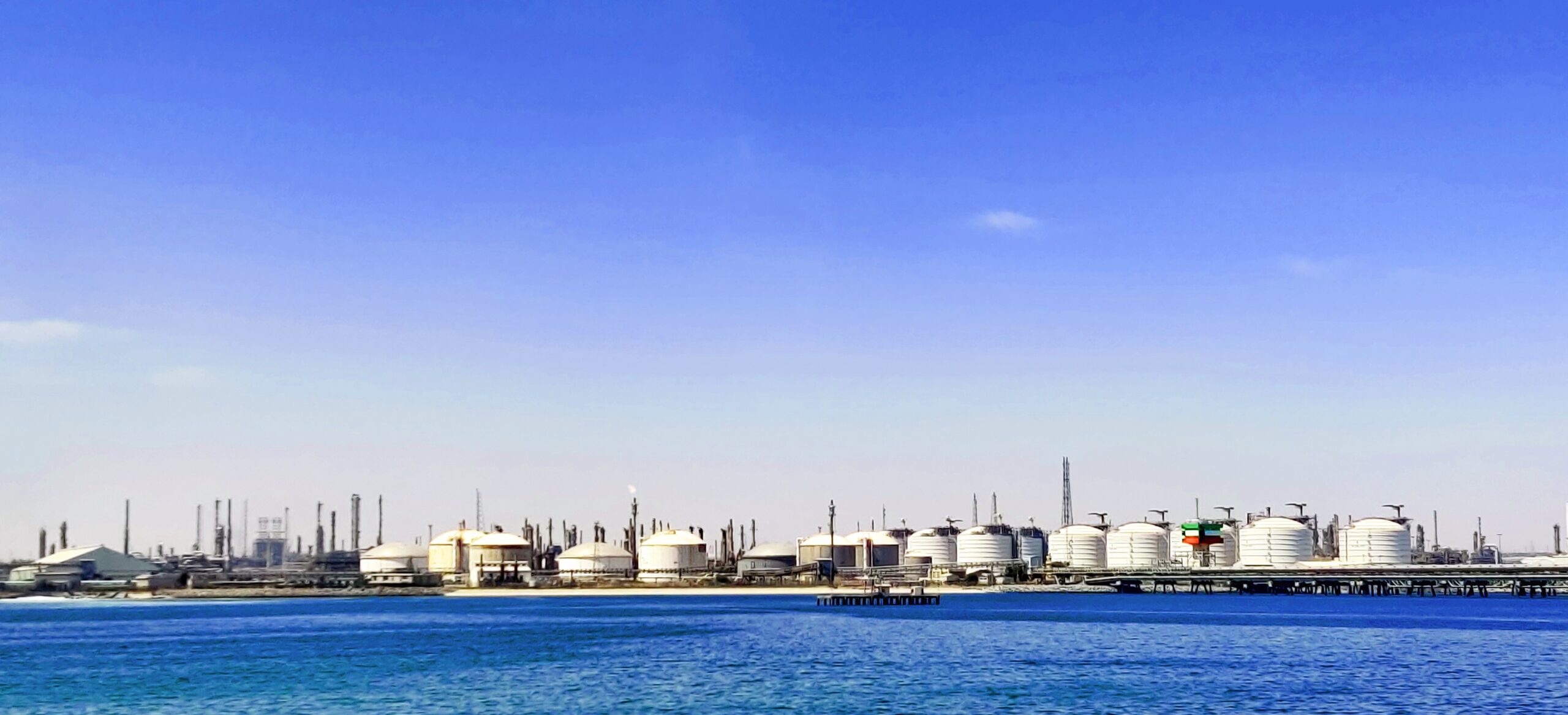
To anchor this structural framework in empirical reality, this analysis examines the ongoing divestiture of Central Tank Terminal (Japan) and Central Terminal Korea by global investment firm KKR. Advised by Nomura Securities, the transaction represents a highly complex cross-border carve-out within the logistics and real asset space. The underlying asset base comprises twelve coastal tank terminals in Japan, one tank terminal in South Korea, and two grain silos situated in South Korea.
The portfolio is currently being marketed with a projected 2025 revenue of approximately $123 million and an adjusted EBITDA of $52 million. The sponsor initially acquired the Japanese operations from a Macquarie-managed vehicle in 2021 via its Asian infrastructure fund. The portfolio was subsequently expanded through a bolt-on acquisition of the South Korean assets in late 2023, executed during the distress and restructuring phase of the Taeyoung Group.
The transaction has attracted significant interest from global buyout funds and infrastructure specialists, with heavyweights including MBK Partners, Actis, and Bain Capital reportedly evaluating the data room. Market intelligence indicates a potential enterprise value exceeding $600 million (including debt), implying an aggressive valuation multiple north of 11x adjusted EBITDA. However, conflicting estimates suggest a valuation range settling between $300 million and $500 million. This massive bid-ask spread signals that absolute price discovery remains highly fragmented and unresolved.
Crucially, while the seller prefers a holistic portfolio sale to maximize the blended multiple and minimize transaction friction, the auction process explicitly permits bidders to submit separate offers for either the Japanese or South Korean operations. This architectural nuance is not a procedural courtesy; it is a meticulously calculated downside hedge designed to maximize the aggregate recovery value.
Investment Thesis & Structural Analysis
Dissecting the EBITDA Stack via SOTP
A superficial reading classifies this transaction simply as a “regional tank terminal deal.” However, a granular dissection of the asset-level financial metrics reveals a starkly different narrative regarding value creation, margin concentration, and capital intensity. The underlying return profiles of the consolidated entities are wildly asymmetric.
- The Volume Driver (Legacy Infrastructure): The Japanese tank terminals account for approximately 65% of total portfolio revenue but contribute only 57% of the aggregate EBITDA. This implies a localized, asset-heavy EBITDA margin hovering in the high 30% range.
- The Profit Engine (High-Throughput Logistics): Conversely, the South Korean grain silos generate a mere 19% of total revenue yet deliver a staggering 26% of the consolidated EBITDA. This translates to a highly efficient operating margin in the upper 50% range.
- The Stabilizer (Core Plus Storage): The South Korean tank terminal operations align more closely with their top-line contribution, representing 16% of revenue and 17% of EBITDA, functioning as a steady macroeconomic stabilizer within the portfolio.
This SOTP breakdown confirms that while the Japanese infrastructure provides the absolute scale necessary for a mega-fund buyout, the actual profitability engine resides in the South Korean grain silos. Bidders evaluating the holistic package must recognize they are paying a blended multiple for assets with vastly different return profiles. Rigorous financial modeling is required to strip out the margin dilution inherent in the legacy operations.
The Dual-Track Hedge as a Structural Moat
From a structural perspective, the seller’s decision to allow bifurcated bidding acts as an embedded insurance policy against a busted auction. By running parallel auction tracks, the sell-side advisors force price discovery across two distinct, non-overlapping liquidity pools. This prevents a localized credit freeze or macro shock from derailing the entire exit process.
Global infrastructure capital seeking yen-denominated real assets can bid aggressively on the Japanese terminals, leveraging local currency financing. Simultaneously, domestic South Korean institutional funds can aggressively underwrite the silo assets, driven by different return mandates and lower cost of capital requirements. If holistic bids fail to meet the targeted blended multiple, the sponsor can simply pivot to a fragmented divestiture, effectively raising the valuation floor.
Furthermore, this portfolio architecture serves as a masterclass in utilizing uncorrelated assets as a natural hedge. For a pan-Asian buyer, the highly profitable, non-correlated grain storage business offsets the macro-cyclical risks inherent in the petrochemical storage sector. It also presents a lucrative post-acquisition liquidity option. A buyer could theoretically spin off the South Korean assets to domestic core-infrastructure buyers post-closing, rapidly deleveraging the Cap Stack and accelerating the return of invested capital to LPs.
Valuation & Risk Assessment
Terminal Value Depletion vs. Cash Flow Stickiness
The primary risk vector in this transaction is not an unforeseen probabilistic event, but rather a deterministic macro trend. The Japanese industrial sector has been structurally reducing its domestic crude refining capacity since 2008, a trend exacerbated by ongoing consolidation and anticipated shutdowns of legacy ethylene facilities. Consequently, the Japanese assets are positioned within a fundamentally contracting end-market.
Sell-side documentation consistently highlights that upwards of 80% of portfolio revenue is backed by “long-term contracts.” However, sophisticated private equity buyers must ruthlessly distinguish between generic customer relationships and actual Weighted Average Lease Expiries (WALE). If key petrochemical offtake contracts face a renewal cliff simultaneously, the terminal value of the LBO model collapses entirely.
The true defensive moat in infrastructure investing is rarely the paper contract itself. Rather, it is the underlying replacement cost of the coastal industrial real estate and the prohibitive, often insurmountable regulatory barriers to developing new hazardous material storage facilities. Bidders must underwrite the liquidation value of the underlying land as the ultimate downside floor.
Adjusted EBITDA and CapEx Leakage
The marketed $52 million adjusted EBITDA requires intense due diligence, as aggressive add-backs routinely create an illusion of robust cash flow. Given that the underlying corporate entity managing the core assets was established in 1966, the aging infrastructure inevitably requires substantial, non-discretionary maintenance. Capital expenditures (CapEx) for seismic retrofitting and stringent environmental compliance are looming realities.
When the delta between adjusted EBITDA and true Free Cash Flow (FCF) is structurally wide, applying a double-digit EBITDA multiple is a classic catalyst for capital destruction. Prudent capital allocators must strictly delineate between growth CapEx—which warrants multiple expansion based on future yield—and deferred maintenance CapEx. The latter is essentially a hidden liability that must be deducted dollar-for-dollar from the enterprise value during the final bidding phase.
FX Exposure and Cap Stack Optimization
The macroeconomic environment injects a final, critical layer of volatility into the valuation framework. With the majority of the portfolio’s cash flow denominated in Japanese Yen, foreign exchange risk management is paramount. A standard mitigant is establishing a natural hedge by loading the operational company (OpCo) with local Yen-denominated debt, perfectly aligning the currency of the liabilities with the operating cash flows.
However, recent shifts in monetary policy complicate this traditional playbook. If global interest rate differentials shift concurrently with a localized drop in terminal utilization rates, the fixed-cost nature of the infrastructure could trigger a non-linear contraction in operating margins. Sophisticated debt syndicates will run aggressive Monte Carlo simulations on this exact scenario, heavily scrutinizing the Debt Service Coverage Ratio (DSCR) before committing to the Cap Stack. Smart buyers will explicitly link the pricing of future upside options—such as terminal expansion or capacity upgrades—to hard performance milestones using earn-out structures, refusing to pre-pay for unverified growth.
Conclusion
The architecture of this transaction reinforces a fundamental tenet of institutional investing: the boundary lines drawn during due diligence ultimately dictate the realized IRR. A blended average perpetually conceals operational realities, smoothing over asset-level distress while diluting the impact of high-performing business units. Only those who aggressively decompose the aggregate metrics via SOTP analysis can accurately underwrite both the embedded macro risks and the latent arbitrage opportunities.
By deconstructing disparate cash flows, structurally hedging downside via bifurcated exit optionality, and refusing to pre-pay for unverified future expansions, capital allocators can insulate their principal against secular decline. Whether navigating a $600 million cross-border buyout or structuring a mid-market carve-out, the governing logic remains identical. The architect who controls the structural boundaries dictates the terms of the transaction, ensuring that capital is deployed not on speculative growth, but on mathematically sound, heavily defended cash flows.
This deal is a specimen of the Portfolio Paradox pattern. See the full entry in the Structure Pattern Library.