Introduction: The Macro Evolution of Infrastructure Capital
The traditional leveraged buyout (LBO) engine has faced significant friction in the current macroeconomic environment, driven by elevated cost of capital and tighter credit markets. In response, elite private equity sponsors are pivoting toward structured equity and infrastructure credit frameworks to deploy mega-cap funds. A dominant theme emerging from this shift is the aggressive pursuit of sovereign infrastructure monetization. Sovereign entities, particularly those in commodity-driven economies, are currently navigating acute fiscal deficits. They urgently require massive liquidity injections but are politically paralyzed from executing outright asset sales or traditional privatizations.
To bridge this bid-ask spread between sovereign constraints and institutional capital requirements, financial architects have refined a highly specialized instrument: the lease-and-leaseback structure coupled with volume-based tariffs. This mechanism systematically decouples physical asset ownership from contractual cash flow rights. Capital providers do not acquire operational infrastructure; instead, they purchase prioritized, synthetic fixed-income streams wrapped in an infrastructure facade. By reshaping the capital stack in this manner, private capital can underwrite sovereign credit profiles, strip out operational volatility, and execute multi-billion-dollar deployments with heavily engineered downside protection.
The Case Study: Project Peregrine and the Kuwaiti Blueprint
This theoretical framework was recently stress-tested and executed flawlessly in one of the most structurally complex foreign direct investments in the Middle East. Codenamed Project Peregrine, this $16 billion transaction was finalized against a backdrop of escalating regional geopolitical conflict. The deal was executed between the Kuwait Oil Company (KOC)—a subsidiary of the state-owned Kuwait Petroleum Corporation (KPC)—and a heavyweight global private equity consortium comprising Blackstone, KKR, and Brookfield.
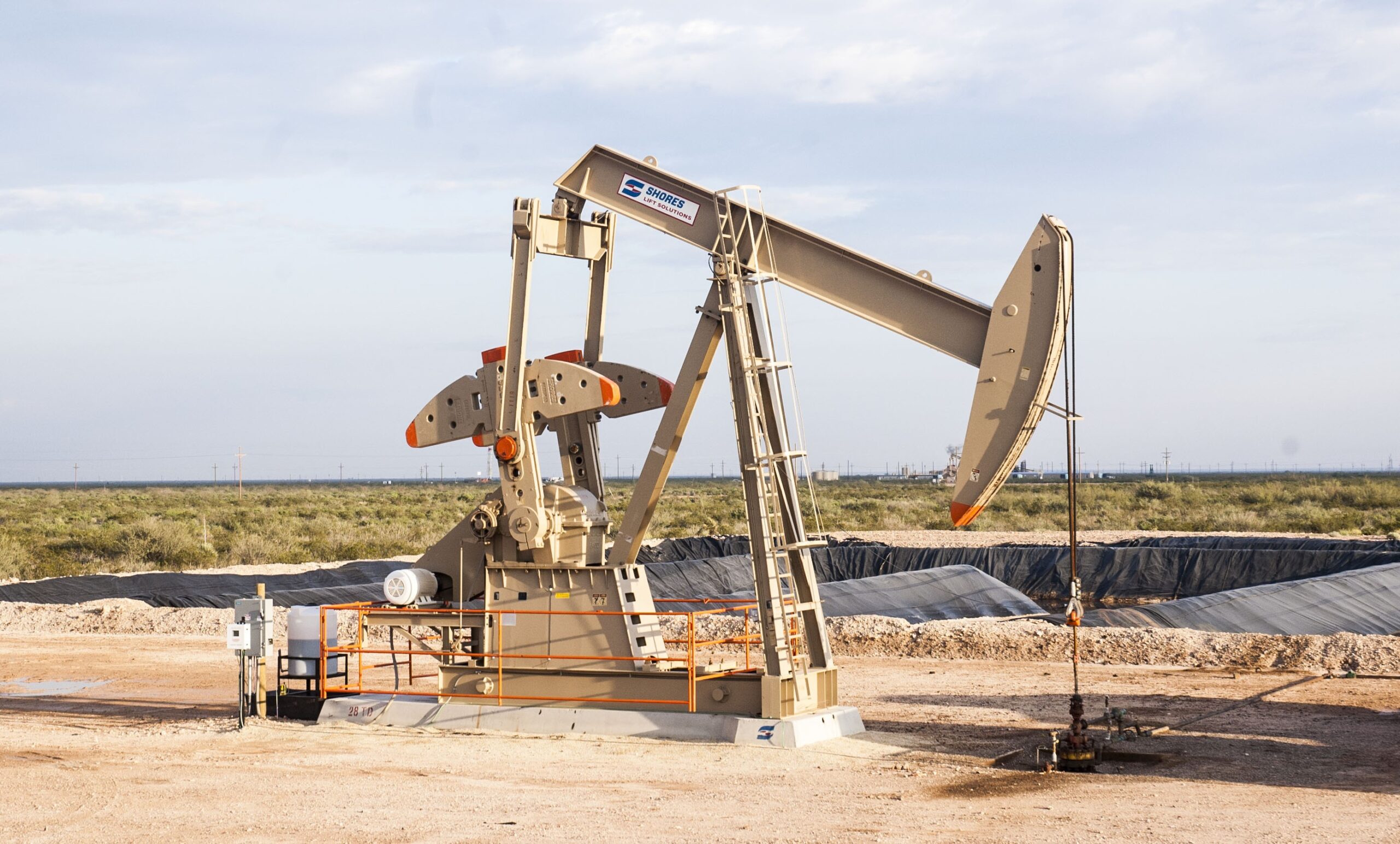
The underlying asset base consists of a critical 320-kilometer network comprising 13 domestic and export pipelines. However, the true innovation lies in the syndicate architecture rather than the physical asset. By deploying equal minority equity checks, the North American sponsors engineered a structure that optics-wise preserves Kuwaiti national sovereignty while securing a highly defensive yield profile for their Limited Partners (LPs). Project Peregrine effectively standardizes the playbook previously pioneered by Saudi Aramco and Abu Dhabi’s ADNOC, proving that global capital can dictate buyer-friendly terms if it solves an immovable sovereign constraint.
Investment Thesis & Structural Analysis
The 51/49 Equity Illusion vs. Cash Flow Reality
Financial media routinely fixates on the optical equity split of these mega-deals. In Project Peregrine, the narrative highlighted that the sovereign retained a 51% majority stake in the newly formed Special Purpose Vehicle (SPV), while the sponsor consortium took a collective 49% minority position. From a political standpoint, this capitalization table is essential for maintaining the narrative of unbroken state sovereignty. From a purely financial perspective, however, this 51/49 ratio is a distraction. The intrinsic value of the deal is strictly dictated by the cash flow waterfall.
The SPV operates solely as a bankruptcy-remote pass-through entity engineered for yield extraction. The sequence of capital reshaping is highly rigid:
- Initial Lease: The newly established SPV leases the exclusive commercial usage rights of the 13 pipelines directly from KOC.
- Immediate Leaseback: The SPV instantly leases those exact operational rights back to the sovereign, maintaining the physical status quo.
- Tariff Generation: In exchange for the leaseback, KOC is legally mandated to pay a strictly defined, volume-linked tariff to the SPV over a 20.5-year duration.
- Liquidity Event: An upfront capital injection of $7.85 billion flows directly to the sovereign’s balance sheet at closing, executing the monetization.
Macro Catalysts: The Sovereign Deficit Dilemma
Understanding the seller’s distinct lack of leverage is crucial to deconstructing the investment thesis. The macroeconomic reality driving KOC to the negotiating table is rooted in a severe, structural fiscal imbalance. Kuwait’s fiscal breakeven oil price currently sits at an elevated $90.50 per barrel. Conversely, the government’s budget formulation was anchored to a highly conservative baseline of $57 per barrel.
This pricing delta has catastrophic implications for the sovereign balance sheet. Projections indicate a massive fiscal deficit of approximately $31.9 billion for the 2026-2027 fiscal year, marking a 54.7% year-over-year expansion. Because Kuwait’s fiscal structure is highly rigid—with public sector wages and state subsidies consuming 76% of all government expenditures—the state faces a localized liquidity crisis. While substantial sovereign wealth funds exist, stringent legal frameworks heavily restrict emergency drawdowns. Consequently, the lease-and-leaseback SPV became the singular viable avenue to access immediate capital without triggering parliamentary revolt over the sale of national crown jewels.
Valuation & Risk
Externalizing Operational Alpha
A foundational pillar of this transaction’s defensive architecture is the total externalization of operational risk. In traditional infrastructure LBOs, sponsors must underwrite heavy CapEx and operational turnaround strategies to drive multiple expansion. Project Peregrine discards this model entirely. The definitive transaction agreements explicitly mandate that KOC bears absolute responsibility for all operational expenditures (OpEx), routine maintenance, environmental liabilities, and facility modernization (CapEx).
The private equity consortium does not manage a single physical valve. By legally pushing all operational execution back to the sovereign operator, the sponsors successfully excised the most volatile variable in the midstream value chain. If pipeline maintenance costs hyper-inflate or facilities age faster than projected, the financial impairment rests entirely on the tariff payer. The consortium is purely underwriting a sovereign credit instrument, capturing infrastructure yields while remaining fully insulated from operational friction.
Downside Hedging & The Time-Value Asymmetry
The $7.85 billion upfront payment exposes the aggressive capital velocity embedded in the deal structure. With nearly half of the total $16 billion enterprise value funded at closing, the residual value is distributed across the 20.5-year contracted tariff stream. This deliberate temporal arrangement sets the stage for a rapid return of principal via the debt capital markets.
Following the established playbook of earlier Middle Eastern midstream carve-outs, the sponsor consortium will likely utilize the highly predictable, SPV-ringfenced cash flows as collateral to issue long-term investment-grade bonds. This securitization strategy effectively functions as a dividend recapitalization. By transferring the bulk of the initial capital outlay to institutional bondholders early in the hold period, the sponsors can achieve rapid Distributions to Paid-In capital (DPI) for their funds. Once the initial equity check is largely derisked through this refinancing, the remaining equity position transforms into a highly leveraged, free-rolling yield option.
Geopolitical Tail Risks and Terminal Value Impairment
Despite the masterful structuring of the cap stack, severe tail risks remain permanently attached to the asset. Geopolitical instability is the primary systemic threat. Project Peregrine was finalized amidst active regional military escalations, and pipelines represent highly vulnerable strategic targets. A physical disruption to the infrastructure would theoretically halt the volume-linked cash flows. Navigating this risk requires an ironclad reliance on force majeure clauses and the esoteric mechanics of institutional war-risk insurance underwriting.
Furthermore, the structure faces extreme terminal value risk. The 20.5-year lease expires in 2046—a timeline that aligns dangerously with global macroeconomic consensus models predicting peak oil demand. Because it is a lease structure, the residual asset value for the SPV at maturity structurally converges to zero. If fiscal distress forces a political renegotiation of the sovereign tariff prior to maturity, the fundamental assumptions underwriting the entire syndication could face catastrophic impairment. The equal 49% syndicate distribution among Blackstone, KKR, and Brookfield serves as a deliberate geopolitical shield; any sovereign default would instantly trigger a diplomatic crisis with Western institutional capital.
Conclusion
The architecture of this $16 billion sovereign monetization provides a masterclass in modern structural finance, demonstrating how alpha is increasingly generated through contract design rather than asset operation. By systematically decoupling cash flow rights from physical ownership, institutional sponsors can manufacture liquidity events for sellers who are fundamentally restricted from executing standard M&A transactions.
The transaction underscores the critical importance of asymmetric risk partitioning and early downside hedging. By externalizing operational liabilities to the asset owner and utilizing securitization to accelerate principal recovery, the structural downside is heavily mitigated. Ultimately, the true underlying collateral in these complex alternative investments is not the physical midstream infrastructure, but the precisely engineered legal architecture of the syndicate itself.