
Introduction: The Macro Shift Toward Downside Structuring
The global private equity landscape has decisively pivoted away from speculative growth narratives toward severe structural downside protection. During the zero-interest-rate policy era, financial sponsors relied heavily on multiple expansion and aggressive top-line projections to generate acceptable internal rates of return (IRR). That playbook is now largely obsolete. In an environment defined by compressed exit multiples and macroeconomic friction, sophisticated capital deployment prioritizes the acquisition of mature, operationally optimized assets over early-stage incubation.
Secondary buyouts—often cynically dismissed as sponsor-to-sponsor “pass-the-parcel” exercises—are increasingly utilized as precision risk-transfer mechanisms. By targeting an asset where the preceding sponsor has already absorbed the heavy lifting of operational restructuring, the acquiring fund systematically mitigates execution risk. The core investment logic is no longer about capturing exponential upside. It is about constructing an impenetrable defensive perimeter around the deployed capital.
This structural alignment reflects a necessary realism in contemporary deal-making. When macroeconomic ceilings cap top-line growth, profitability must be engineered through absolute governance, ruthless downside control, and highly favorable entry multiples. The resulting financial architecture values capital preservation above all else, targeting distressed liquidity scenarios to dictate pricing terms.
The Case Study: Bain Capital and the Carve-Out Evolution
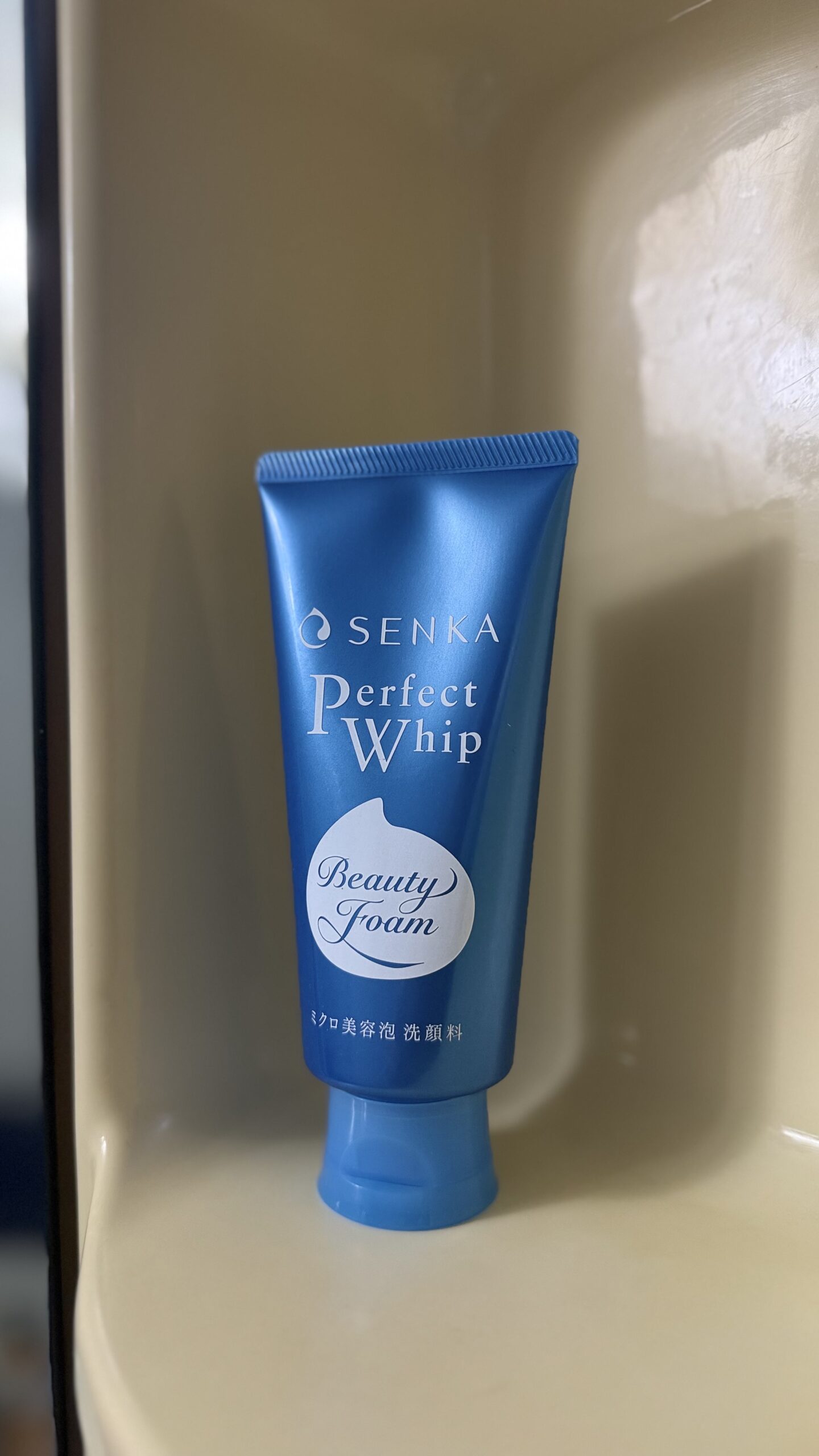
To dissect the anatomy of this defensive LBO architecture, the recent ¥200 billion secondary buyout of FineToday by Bain Capital provides a textbook framework. Originating in Japan, FineToday is a major mass-market personal care entity, initially carved out from global cosmetics conglomerate Shiseido. In 2021, Shiseido divested its non-core bathroom staple brands—including Tsubaki, Senka, and Uno—to European sponsor CVC Capital Partners for approximately ¥160 billion, seeking to pivot entirely toward prestige skincare lines.
Over a five-year holding period, CVC executed the rigorous post-merger integration (PMI) required to transform a neglected corporate division into a standalone enterprise. This involved migrating off complex Transitional Service Agreements (TSAs), establishing independent R&D facilities, and securing localized manufacturing assets, notably a facility in Vietnam. Despite executing a textbook operational turnaround, CVC found itself trapped by external market forces.
Two consecutive attempts at an initial public offering (IPO) were abandoned due to volatile equity capital markets and geopolitical overhang. A subsequent trade sale to a Chinese strategic buyer collapsed entirely amid deteriorating diplomatic relations. Consequently, Bain Capital capitalized on the seller’s mounting fund maturity pressures, acquiring a structurally completed asset at a severely distressed entry point in early 2026.
Investment Thesis & Structural Analysis
Bypassing PMI Friction for Completed Assets
The primary driver of this transaction is the acquisition of a finalized operational restructuring. Market headlines frequently frame such deals as forced fire sales, but a strict reading of the financials reveals a highly optimized asset. Under CVC’s stewardship, FineToday demonstrated aggressive profitability improvements despite stagnant top-line revenue. The company reported ¥107.3 billion in revenue for 2024, followed by ¥56.6 billion in the first half of 2025.
The critical metric, however, is the adjusted EBITDA margin, which expanded violently from 15.5% in 2024 to 21% by the first half of 2025. Bain Capital effectively purchased a finished margin profile, circumventing the operational friction and capital expenditure typically associated with complex corporate carve-outs. This allows the incoming sponsor to immediately pivot toward cash flow generation and debt paydown rather than operational stabilization.
The valuation mechanics validate this defensive posture. At a ¥200 billion enterprise value, the entry multiple represents roughly 12x trailing 2024 EBITDA. More importantly, when calculating against the annualized 1H 2025 adjusted EBITDA, the multiple compresses to a highly conservative 8x. In a sector where global consumer staples historically trade within a 12x to 18x EV/EBITDA range, this represents a massive structural discount.
The Mechanics of Distressed Liquidity Arbitrage
The strategic rationale underpinning this capital deployment can be distilled into several core structural realities:
- Zero Multiple Expansion: CVC’s exit generated a Gross MOIC (Multiple on Invested Capital) of merely ~1.25x over five years. This mathematically proves that all enterprise value growth was driven purely by internal margin expansion, signaling the broader market’s absolute refusal to award a growth premium to the asset.
- Commoditized Sector Dynamics: Mass-market personal care is defined by exceptionally low consumer switching costs. The asset possesses virtually no pricing power against private labels and agile independent brands, justifying a hard cap on exit valuations.
- Seller Liquidity Leverage: The suppressed pricing was dictated almost entirely by CVC’s liquidity constraints regarding its aging Asia Fund V. Bain translated the seller’s temporal desperation into a depressed entry multiple, proving that time is the ultimate discount rate in private equity.
- De-Risked Infrastructure: By acquiring a post-PMI entity, the buyer bypasses the highest-risk phase of an LBO. The separation of IT infrastructure and the establishment of independent supply chains have already been financed and executed by the preceding sponsor.
Valuation & Risk Allocation
Engineering the Capital Stack for Absolute Governance
In asset classes where macroeconomic upside is constrained, financial sponsors must engineer their returns through total operational control. The architecture of the FineToday deal is heavily skewed toward preventing capital impairment. The entry valuation itself—securing an 8x annualized EBITDA multiple—establishes a dense primary layer of equity cushion, insulating the capital stack against minor operational missteps.
Beyond pricing, absolute governance forms the second defensive layer. Bain executed a 100% equity buyout rather than taking a minority or co-investment position. This is a calculated structural mandate. When an asset’s growth vector is tethered to highly volatile external factors, minority stakes introduce unacceptable liquidity risks. Total control ensures the GP retains absolute authority over board composition, dividend recapitalization timelines, and the ultimate exit execution strategy.
The third layer relies on aggressive contractual risk transfer. In secondary buyouts possessing complex carve-out histories, the acquiring sponsor utilizes Warranty and Indemnity (W&I) insurance and specific escrow carve-outs. This mechanism systematically shifts legacy tax exposures, latent regulatory contingencies, and lingering TSA liabilities back to the seller, effectively sanitizing the balance sheet post-close.
Margin Integrity and the Geopolitical Single Point of Failure
Despite a rigorously constructed defensive architecture, two critical vulnerabilities threaten the baseline valuation model. The most immediate risk concerns the integrity of the Quality of Earnings (QoE). A margin expansion of 5.5 percentage points within a tight 12-month window is highly anomalous for mature consumer staples.
If this profitability spike was engineered through pre-sale “harvesting”—specifically, the aggressive suppression of advertising and promotional (A&P) spend to optimize short-term EBITDA—the core thesis is inherently flawed. Should the normalized, sustainable margin sit closer to historical averages, the apparent 8x entry multiple is an optical illusion, and the equity cushion evaporates. W&I insurance policies offer zero protection against fundamentally compromised baseline earnings.
The secondary, systemic risk is the severe geographic concentration of cash flows. As of early 2025, approximately 36% of FineToday’s revenue was derived directly from China and Hong Kong. This renders nearly 40% of the company’s total cash flow generation subordinate to volatile diplomatic relations. This structural overhang is not a theoretical tail risk; it is a proven single point of failure that has already derailed three separate exit events. Financial engineering cannot hedge against geopolitical mandates.
Conclusion
The structural anatomy of this secondary buyout provides a definitive blueprint for institutional capital deployment in low-growth macro regimes. The transaction dispenses entirely with the illusion of multiple arbitrage, focusing strictly on acquiring de-risked margins at distressed entry points. By weaponizing a forced seller’s timeline and imposing an aggressive downside hedge, the acquiring sponsor limits its exposure to execution risk. Ultimately, when macroeconomic expansion falters, true alpha is generated through absolute governance, contractual risk transfer, and a ruthless commitment to capital preservation.